

In the Valley of Fading Promises
Katarína Gramatová’s Promise, I’ll Be Fine (Hore je nebo, v doline som ja, 2024)
Vol. 165 (May 2026) by Martin Kudláč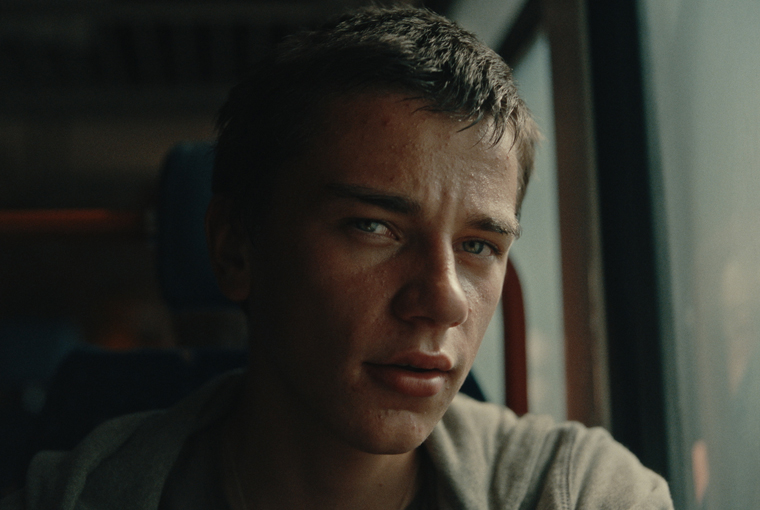
Originally an editor, Katarína Gramatová fully embraces directing in her feature-length fiction debut Promise, I’ll Be Fine. The Slovak filmmaker had directed the student short film Cherries (2019) before helming the documentary short A Good Mind Grows in Thorny Places (2023), which served as a precursor to her debut feature. Gramatová’s documentary short focuses on the inhabitants of the small rural village of Utekáč in Slovakia and was spotlighted at the Karlovy Vary International Film Festival’s 2024 initiative Future Frames: Generation NEXT of European Cinema that introduces emerging young talents to watch. In 2025, Gramatová returned to the Karlovy Vary International Film Festival to introduce the European premiere of her feature-length debut, which again chooses the village of Utekáč as its setting in a fictional coming-of-age summer drama.
The film centers on 15-year old Eňo (played by non-professional local Michal Záchenský) who spends a muted summer in the village of Utekáč, where broken glassworks mark the memory of better times and idle days stretch long. Left in the care of his grandmother (Jana Oľhová), the teenager clings to the hope that his elusive mother Martina (Eva Mores), who appears only intermittently, will eventually take him back with her to Austria, where she is seemingly building a new life. As weeks pass and local gossip grows louder, Eňo’s sense of truth and belonging begin to fracture. The film observes this disintegration with austere stillness, refusing overt drama, while quietly excavating the psychological and social textures of abandonment, idealization, and adolescent longing.
Trained in editing, Gramatová applies a rhythm-sensitive, emotionally attuned approach to storytelling. Her aesthetic leans toward hybrid realism, marked by long-form engagement with location and subjects, including the consistent use of non-professional actors, and places her work within the broader trend of regional European cinema grounded in social observation and poetic realism. While Gramatová first explored Utekáč and its inhabitants in her hybrid documentary short A Good Mind Grows in Thorny Places, Promise, I’ll Be Fine deepens that engagement with a more structured narrative while retaining the raw immediacy of her documentary-rooted methods. This creates a continuity of both environment and ethos, with the director building on the extended time spent filming material for her short and informally rehearsing with the boys who later appear in the feature. The two works thus operate as companion pieces: A Good Mind Grows in Thorny Places reveals the social and emotional terrain the boys inhabit; Promise, I’ll Be Fine translates that terrain into a fictional narrative that retains a sense of lived-in veracity. The dual presence of fiction and ethnographic intimacy underlines Gramatová’s method, which resembles street casting but is built on sustained trust and collaboration.
Promise, I’ll Be Fine engages with a set of intersecting tensions: parental absence, rural marginalization, emotional repression, and the effects of economic disintegration. The defunct glass factory at the center of the village remains an unspoken monument to structural decline and a memento of the better times under the previous regime before the Velvet Revolution. While Gramatová resists sociological exposition, the film addresses the topic implicitly through the motif of the so-called hungry valley (a term denoting places with extremely high unemployment rates). The economic deprivation forces younger people to leave in search of work while leaving their parents and children behind. That’s the protagonist’s family situation. His single mother is working in Austria and sends Eňo clothes and money to his grandmother to cover their living costs.
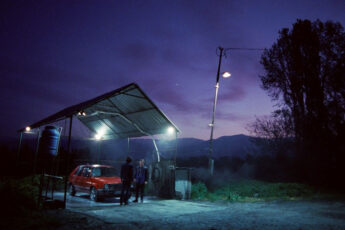
Gramatová, who also penned the script, was initially formed by the tradition of social realism dramas from the region of Central Europe. She, alongside the emerging young cinematographer Tomáš Kotas, include the framing shots of sleepy hamlet with seniors and misbehaving kids. While there is a documentary sensibility to the film, Gramatová opts for a more stylized form of naturalism and a more lighthearted form of storytelling vis-à-vis Eňo and his rag-tag group of friends (Július Oľha, Adam Šuniar, Dominik Vetrák). The boys are spending the summer repairing and riding old mopeds. Stealing the gas on the cemetery parking lot from cars of people attending a funeral in the village is an act of both youthful cockiness as well as economic necessity. Eňo is torn between participating in these malevolent acts out of peer pressure, and listening to his mother’s cautionary words not to become a thief, as village gossip already alleges his friends to be stealing.
The dilemma triggers an emotional imbalance in the protagonist. Michal Záchenský embodies Eňo with withdrawn affect from the beginning as a son growing up without his mother and longing for her. Meanwhile, the social circle of peers his mother considers bad influence is his only safety net in the village. Záhumenský’s scenes with Eva Mores, one of the few professional actors in the cast, are marked by a studied asymmetry that underscores the emotional dissonance between a child searching for connection and a parent living her life elsewhere as she returns only for brief moments, crashing on the grandmother’s couch.
Gramatová does not sculpt a conventional arc for Eňo. The summer coming-of-age adventure with implicit social realist drama motifs gradually builds up a crime layer where the protagonist’s sense of idealism about his mother comes crashing down. The separation anxiety turns into a rite of passage for the young protagonist as he has to decide whether to confront his mother about her absence, or stand in her defense in the face of people speculating about the reasons for her stay in Austria.
Races on mopeds and the crime narrative strand infuse Promise, I’ll Be Fine with plot-driven energy that counteracts the documentary sensibility put to use in the beginning of the film during the portrayal of daily village life. Rather minimalist in storytelling, the film nevertheless explores several topics, including a critique of systemic neglect, a psychological portrait of a boy’s idealization of his absent mother, and a commentary on the lingering effects of post-Communist transformation. Even Eňo’s investigation into the rumors surrounding his mother is treated obliquely, more as an internal process than as an outward plot development.
Within the context of Slovak cinema, Gramatová’s approach marks a generational shift from moralist social realism toward a social realism in subject and less in form, instead resorting to a fusion of other genre elements aimed at younger audiences. While she shares with contemporaries an interest in marginal spaces and unspoken trauma, she distinguishes herself through style and genre incorporation while leaning more towards youth cinema without fully abandoning social realist undercurrents.


Leave a Comment