

“She Was Told She Cried a Lot At This Time, But I Don’t Remember It.”
Iva Radivojević’s When the Phone Rang (Kada je zazvonio telefon, 2024)
Vol. 161 (January 2026) by Jack Page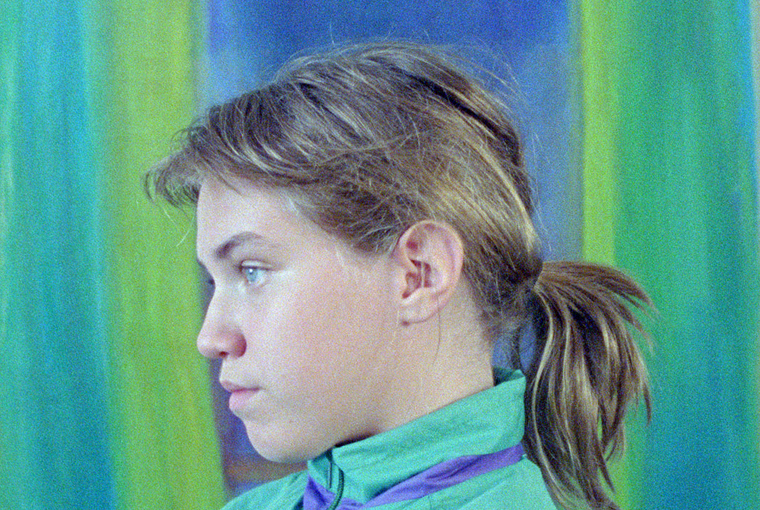
Through a series of elliptical moments surrounding a fateful telephone call, eleven-year-old Lana spends what will forever be her last day in her home country of Yugoslavia. News of her grandfather’s heart-attack, her father’s seedy extortion racket, and the economic and political climate that will lead to the imminent breakup of Yugoslavia, trigger Lana’s swift departure. As she says her final goodbyes to her close friends and family, an internal monologue of what might be her future self guides the audience on a sensory journey through her memory and trauma. It is a hypnotizing and meditative portrayal of the past through seemingly humdrum activities; playing in the apartment block, visiting the hairdresser, singing with friends. However, these memories are filled with a melancholy sadness as they mark the end of Lana’s childhood, which can only be realized in hindsight by the voice-over narrator. When the Phone Rang is an inspired and mesmerizing rumination on trauma and identity in the wake of losing where you come from.
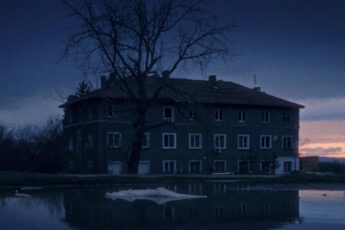
The film’s unique aesthetic is borderline experimental. The flat format and square aspect ratio lend the visuals a retro 90s look. The grainy texture of the film stock produces a polaroid-like impression of the image so that each static shot resembles a collection of old family photographs. Some characters stand motionless inside the frame as if the photograph has come to life or the mind is trying to recollect a forgotten memory from an imaginary image. The set design and costumes transport the audience back to the 1990s. Outdated technology such as VHS tapes, landline telephones, and cassettes are often focal points of the mise-en-scène, and actors are regularly wearing oversized 90s grunge band T-shirts with heavy, wide leg jeans or neon tracksuits.
The presence of the television in the household is very prevalent. The muffled news reports contextualize the film’s setting, announcing the rise of inflation and a country ravaged by war. However, television is also a source of joy for Lana (Natalija Ilinčić). She wastes her spare time watching “unbelievable drama” in the form of the opera Carmen, or befriending the local hoodlum Vlada (Vasilije Zečević) and watching a live rock concert in his apartment. As they sing and dance on the couch, their reflection is positioned on the TV screen as if watching through a window. Importantly, the film is filled with surreal and abstract imagery. The nature of memory is fluid, it can be misleading, imaginary, or incomplete. Lana’s father’s identity, for example, is intentionally never shown. He is a hand smoking a cigarette or seen ushering his daughters to follow him. He is a blurred shadow talking on the phone behind the door or a figure in a checkered shirt with his back turned to the camera. This lack of information leads the spectator to question the validity of the voice-over narrator (Slavica Bajčeta). Similarly, by speaking in the first person, the authoritative female voice-over separates herself from the character of Lana using “I” and “she.” The narrator is aligned with Lana in so much as she knows the utmost personal details, but never admits to being the same person. It seems that this is done to suggest the voice-over is an unreliable narrator but also because the ‘real’ Lana isn’t the same Lana she was in 1992. Lana’s anxiety and identity crisis stem from the same issue as does the unreliable nature of the voice-over narrator: to leave and lose her country is to leave and lose that version of herself behind.
There are plenty of still life motifs that punctuate the narrative, including plants, clocks, and clouds. Instead of representing the passing of time, these images preserve it. The plants do not grow, the clock’s hands tick but do not move forward, and the clouds do not change shape. These are objects stuck in time, trapped in the memory of the narrator to be replayed time and again. In a dream sequence, a close-up of Lana’s profile is disembodied in the middle of the frame. As her head begins to spin wildly, blue and red silhouettes of her face are superimposed on top. Hushed, unintelligible voices are layered over the pulsating electronica music as the blue and red copies of Lana flash rhythmically in time with the beat. She opens and closes her eyes, blinking painfully and swatting away at her other mirrored selves. It is a nightmarish vision, one that could be interpreted as Lana’s struggle with her identity in which she has three opposing versions of herself fighting for dominance, to be willed into existence. It could also symbolize Lana’s transition into puberty and adulthood in which she is torn between past, present, and future self, resisting to grow up for fear of the change and responsibility that lies ahead.
The film’s final sequence is a tracking shot from the perspective of a passenger looking out of the car window. As the city becomes the motorway and the roads meander into the mountains, the voice-over narrator lists all of the people she left behind. There is a montage of both black and white and color photographs that capture family portraits, weddings, and birthdays. In the darkness of the night drive, Lana’s incorporeal face once again fills the frame and the background transitions into the gushing of ocean waves. The screen has an unnatural blue hue as the water laps at Lana’s ghostly impression. Instead of a literal representation, this sorrowful and somber conclusion could symbolize Lana’s tearful loss of innocence, a memory so painful the voice-over narrator refuses to admit it: “She was told she cried a lot at this time, but I don’t remember it.”

Leave a Comment