
Between Unstable Experience and Retrospective Framing
Jan Těšitel’s David (2015)
Vol. 167 (September 2026) by Jaroslav Cibulka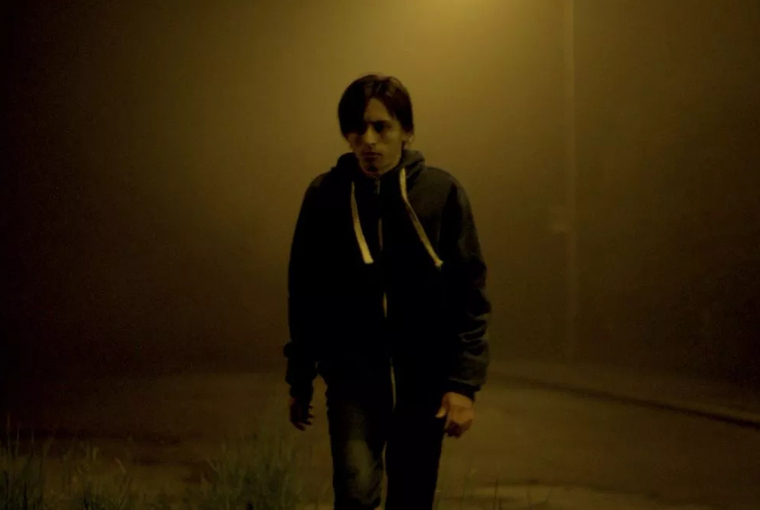
For film critics, debut features often reveal their full significance only in retrospect. At the moment of their release, they are typically read through expectations of what a filmmaker might become rather than what the film itself already is. They are usually discussed as announcements of future talent, yet the careers that follow rarely follow a predictable or linear trajectory. This is especially true in the smaller film industries of Central and Eastern Europe, where the passage from a critically acclaimed debut to a sustainable filmmaking career is shaped as much by industrial conditions as by artistic intent.
Jan Těšitel’s David (2015) is a compelling case in point.1 Emerging as part of a broader wave of artistically ambitious Czech debut features in the mid-2010s, which marked a clear departure from the prevailing Czech audiovisual landscape and carried strong international appeal, the film premiered to considerable acclaim and collected numerous awards on the festival circuit. It is also a graduation film from FAMU (the Film and TV School of the Academy of Performing Arts in Prague) produced under restricted production conditions, with a modest runtime of just over 70 minutes. It appeared to position its director firmly within the tradition of contemporary Central European arthouse cinema, suggesting a clear path toward auteur-driven festival filmmaking and the production system, networks, and circulation that come with it.
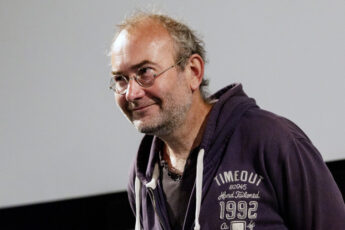
Over the decade that followed, Těšitel moved in a rather different direction, with the young director working on television documentaries, commissioned projects, and genre filmmaking, alongside teaching at the Prague Film Institute. This shift became especially visible in 2025, when – ten years after his debut – two of his feature films, All the Good Deeds (Stvůry), a crime drama, and Goldilocks (Zlatovláska), a family-oriented fairy tale, premiered in Czech cinemas within the same year. The sharp contrast between them, across genres and production contexts, further frames David as a particularly instructive point of departure for Těšitel’s filmmaking trajectory.
Furthermore, returning to David is valuable for reasons that extend beyond Těšitel’s individual career. In the years since its release, Czech debut features such as If Pigeons Turned to Gold (Kdyby se holubi proměnili ve zlato, 2026), Caravan (Karavan, 2025), Victim (Oběť, 2024), and After Party (2024) have reached the festival circuit with similarly challenging formal approaches and demanding themes, achieving strong visibility across major festivals. Seen from today’s perspective, David appears not as an isolated achievement, but as an early example of a broader tendency within contemporary Czech cinema.
Yet this broader perspective should not overshadow the film itself. David remains a remarkable artistic achievement in its own right. Revisiting it today therefore means not only reconsidering its place within Těšitel’s trajectory, but also returning to the formal qualities and distinctive, carefully constructed, viewing experience that define it as a notable debut. In order to capture this artistic specificity, the following discussion turns to a close reading of the film.
Těšitel’s debut follows a twenty-year-old man with a mild intellectual disability – David – who leaves his family home in Ústí nad Labem and travels alone to Prague. What begins as an attempt to escape an oppressive domestic environment gradually turns into a disorienting journey through an indifferent city, as he drifts between fleeting encounters, moments of desire, and increasingly troubling experiences. Rather than functioning as a conventional coming-of-age narrative, the film seeks to immerse the viewer in David’s lived experience of the world.
What makes David particularly compelling is the way it holds onto its protagonist while at the same time presenting the surrounding world as one defined by social alienation and uncertainty. The film consistently unfolds through his perspective, which shapes both the narrative and its form – not just what happens, but how it is experienced.
The film’s close attachment to David is evident from the outset. In the opening shot, the viewer first hears him before seeing him, as a slow tracking shot from behind moves closer to the back of his head. From the very beginning, this establishes a mode of closeness in which the film does not present David from the outside, but gradually aligns itself with his position in the world. This proximity is not only a stylistic choice but also a structural principle that shapes the film as a whole.
Although David’s intellectual disability shapes his behavior, the film never reduces him to a diagnosis or a social problem. Instead, David is presented through everyday actions, desires, and frustrations. His decision to leave home is not framed as a dramatic act of rebellion, but as an attempt to escape a life that has become increasingly restrictive. Rather than offering clear psychological explanations, the film never fully makes his decision to leave home legible, staying close to his experience and leaving both him and the viewer in a state of uncertainty.
Much of this effect is due to Patrik Holubář’s performance in the title role. Although still a theater student at the time, he carries the film with a restrained and natural presence. His performance relies on small, precise gestures – hesitations in movement, a lowered gaze, brief pauses, fragmented speech, and at times an almost absent expression. His movements can appear slightly awkward or mechanical, and his vocal expression occasionally produces unusual, unnatural sounds. More subtle are small details such as blinking or the movement of his nose, which quietly contribute to the specificity of his physical presence. Rather than expressing emotion directly, the performance lets meaning emerge through the body rather than dialogue.
This restraint extends to David’s interactions with others. He often seems unable to fully understand the people around him or the situations he finds himself in, just as he is frequently misunderstood in return. Communication becomes fragmented, marked more by gaps than clarity. In this sense, Holubář’s performance grounds the film’s subjectivity in bodily presence and rhythm, making David gradually legible through movement rather than explanation.
A key aspect of David’s subjectivity lies in his awareness of his own difference. He knows that he is ‘different’ or somehow ‘disabled,’ and that his decision to leave home may not be entirely ‘normal,’ but he is unable to fully articulate this awareness. This is not clarified by other characters, who also avoid naming or explaining his condition. As a result, a sense of something slightly ‘off’ emerges – an uncertainty that is difficult to locate or define. The film thus constructs a world in which actions and motivations are never fully clear, and meaning is suggested rather than directly stated.
This sense of something being slightly ‘off’ extends into the spaces David moves through, most notably the city of Prague itself. The city is neither clearly defined nor is it reduced to a merely symbolic backdrop. Instead, it emerges as a shifting environment he struggles to navigate. Streets, interiors, and public spaces appear fragmented and often disconnected from one another, mirroring the fragility of his interactions with others, as well as the difficulty of turning intention into action in the city. In this sense, Prague functions as a space where freedom is continuously tested but never fully realized.
Rather than offering orientation or clarity, Prague reinforces a sense of dislocation. David moves through it without a stable sense of direction, encountering strangers and situations that remain only partly readable to him. These encounters are brief and uncertain, and rarely develop into meaningful contact.
At the same time, the city becomes a space where David’s idea of freedom is constantly tested. He arrives with a vague sense of escape and independence, but this idea quickly breaks down in practice. He searches for his brother but does not find him, and his attempts to explore his sexuality do not lead to any clear understanding or catharsis. This is evident when he tries to masturbate in a public toilet, or later in a strip club, where he sits in a private booth but cannot engage with the performer’s show. Even these moments remain difficult for him to understand or integrate into any shared social logic.
The film’s structure is further shaped by a shift between David’s perspective and the parallel presence of his mother and father. While David drifts through Prague, the film also follows his parents, who try to understand his disappearance. Their storyline is marked by uncertainty, concern, and emotional distress, moving between worry, guilt, and different ways of making sense of what has happened. The father, in particular, emerges as a more complex and ambivalent figure, whose role in David’s departure remains unclear and may be connected to pressures that contributed to his decision to leave home.
This structure gives the film a clear rhythm, shifting between experience and reflection. However, the parents’ storyline does not provide a clearer understanding of David’s situation. Instead, it reinforces the film’s overall ambiguity, adding another layer of uncertainty rather than resolving it. As a result, the narrative becomes more fragmented and emotionally heavy, deepening the sense of an unstable mode of experience that defines the film as a whole.
The sense of instability is not only created through character, setting, and narration, but also through the film’s formal choices. The camera often stays close to David, following him without strong narrative emphasis or a stable sense of orientation. Rather than building a coherent sense of space, it remains attached to his movement, reinforcing the feeling that the viewer never fully leaves his experience behind.
Such constrained perspective is reinforced by a broader formal pattern. The repetition of motifs, situations, and even camera positions further contributes to a sense of closure and circularity in the film. Rather than moving forward in a linear way, many sequences repeat earlier moments, creating a structure that feels cyclical and self-contained. At the same time, this repetition also produces a subtle sense of claustrophobia, as David seems trapped within similar spatial and behavioral patterns that he cannot fully escape.
This is also supported by the film’s visual design. A muted color palette and dark grading give the city a grey and often cold appearance. Frequent use of shallow depth of field and occasional soft focus prevents a fully clear view of space, keeping the image slightly unsettled and out of reach. This is particularly noticeable during David’s journeys by train, bus, or metro, as well as in moments of vulnerability, such as when he wakes up on the doorstep of an apartment building after spending the night outside, or when he runs through the city in fear. The film also frequently uses close-ups and extreme close-ups of bodies and faces, which, together with the restricted focus, isolate David from his surroundings and draw attention to bodily presence rather than the space around him.
Sound plays a similarly restrained role. The film uses music very sparingly; instead, the soundtrack is dominated by urban noise: traffic, public transport, fragments of conversations, and other everyday sounds that often overlap and occasionally become slightly abrasive. Throughout David’s journey through Prague, these sounds contribute to a sense of indifference and hostility. The frequent absence of dialogue is equally important. Many scenes rely on ambient noise, silence, or David’s hesitant attempts at communication rather than sustained conversation. As a result, sound contributes less to narrative clarity than to a persistent sense of uncertainty and isolation.
Through its formal strategies, the film does not simply represent David’s experience of dislocation – it instead becomes it. The viewer is not positioned as an outside observer, but drawn into a gradual descent into perceptual instability. What emerges is not simply a portrait of a young man moving through an unfamiliar city, but a carefully constructed mode of experience in which perception, communication, and spatial orientation are kept in a fragile and unsettled state.
As my reading has aimed to demonstrate, David emerges as a striking debut through the way it constructs subjectivity across several formal layers. Rather than relying on a single expressive strategy, the film makes several elements interact with each other, producing a coherent yet unstable viewing experience. It also gains new contours in hindsight, as later developments in its director’s career continue to reshape how it is understood, while resisting any fixed position within it.
These shifting contours become particularly visible in my interview with Jan Těšitel that is also part of the September issue 2026, where they are directly linked to the director’s later career trajectory. What once appeared as a potential entry into auteur-driven festival cinema has in practice developed in a different direction, as Těšitel moved towards television and genre filmmaking. In this sense, the interview highlights a gap between the expectations surrounding David at the time of its release and the actual paths Těšitel’s career has taken since. Read against this background, David no longer functions as a step within a linear arthouse trajectory, but as a point of departure for understanding how unstable and unpredictable such trajectories can be. While it is an ambitious debut that once aligned itself with international festival sensibilities, it resists any straightforward or reductive framing. Although the film belongs to a different moment, it continues to resonate precisely because that moment can no longer be fully recovered.
- An accompanying interview with Jan Těšitel, which uses David as a point of departure for a discussion of his subsequent career and the contemporary film industry, can be found here: https://eefb.org/country/czech-republic/jan-tesitel-on-david/. ↩︎
Leave a Comment