
“Your Shoes Untied, But Keep Walking.”
Tereza Nvotová’s Father (Otec, 2025)
Vol. 164 (April 2026) by Jack Page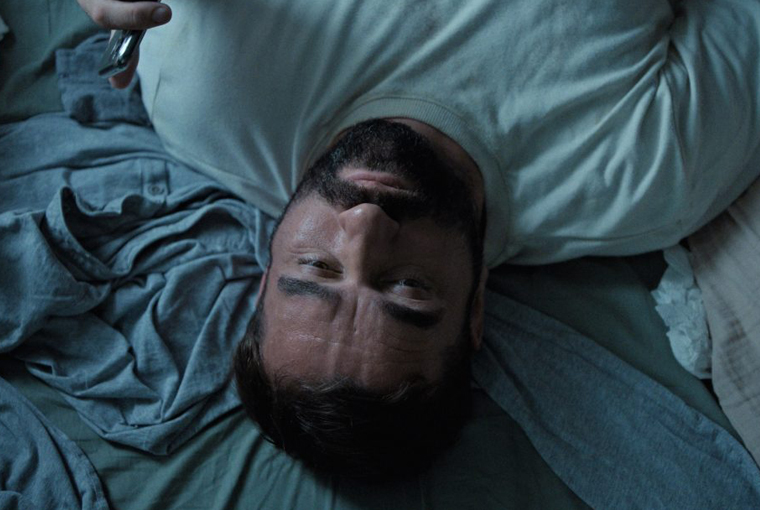
Based on true events and comprised of just nine long takes, Father is a grueling and fiercely harrowing depiction of a once happily married couple who has the unthinkable happen to their child. Their relationship will be tested to extremes and their lives upended, but there are some tragedies that you simply cannot return from.
Michal (Milan Ondrík) and Zuzka (Dominika Morávková) are preparing for work like any other day. While Zuzka feeds their two-year-old daughter breakfast, Michal goes running around the neighborhood. In just one take, uninterrupted by any edits or cuts, their entire morning routine is captured down to the very last detail. From showering, checking freckles, playing with their child, installing the baby seat, and driving to the office, the mundane minutiae of their everyday habits are closely documented. Since, on that fateful day, Zuzka is running late, it is agreed Michal will drop their little girl off at daycare. Before Michal begins singing “If You’re Happy and You Know It” (a nasty foreboding), the car radio announces the country is in the grip of the biggest heatwave on record. At work, Michal’s mobile is constantly ringing. His assistant rearranges his entire day’s schedule to accommodate a new manager who decided to start a week earlier than expected. Michal’s ex-wife is demanding additional financial aid for her ailing father and Zuzka needs him to decide on the furniture models before they all sell out. The office’s air-conditioning is faulty and the employees are fanning themselves to cool down. Michal looks out the window into the carpark to see a young boy dowse his own head with water. Michal scrolls past news reports of wildfire outbreaks on the internet, his armpits sodden with sweat patches. The unrelenting pace and propulsion of his hectic day is mirrored by the camerawork, which tracks Michal with a claustrophobic intensity through pokey hallways and cramped meeting rooms. Towards the end of the day, Michal receives yet another call from Zuzka. Their daughter is not at daycare. Michal exits the building in a frenzied panic to his car where he finds the dead body of his baby girl. She was forgotten for six hours in the heat. “I’ve killed her!” screams Michal as he falls to his knees on the pavement in shock and the screen fades to white in the first hard cut of the film.
Michal and Zuzka go through a deep depression and decide to separate. News reporters and paparazzi swarm their home most days. The incident is all over the television and newspapers. Michal is labeled a murderer and trialed for manslaughter. Despite their hardships and mistakes, Michal and Zuzka are also the victims of great injustice and misjudgment. Hiding from his own surprise birthday party, Michal eavesdrops on his closest friends and family. Amongst their gossiping, they reveal their true feelings about the death of his daughter, claiming he is a killer and not to be trusted. Zuzka, however, offers Michal unwavering support throughout the entire ordeal. While her supportive attitude is often complicated by feelings of hate, anger, and sorrow, it is wholly unconditional. In this way, Father is not just a recounting of grief at its mightiest, it is a celebration of real love between the two protagonists. Even in the knowledge they can never have what they used to or indeed start over from scratch, they remain a constant pillar of strength in each other’s lives; a shoulder to cry on, a symbiotic emotional support system.
As if to bookend the film, the last scene shares the same composition as the first. Michal is once again framed in a medium close-up as he jogs, basking in the early morning sunlight. Rays of light occasionally blind him as he squints and winces between shade. The camera steadily tracks his running, keeping the same pace as the character, giving the impression Michal is barely making any progress. However, this time round, Michal wears a more anguished and painful expression. He seems to have lost the gleeful look of enjoyment that was depicted during the run in the beginning of the film. Now spit foams at the corners of his mouth as he breathes exasperatingly through gritted teeth. His gasping becomes erratic and his eyes flutter behind his eyelids as if trying to catch a thought in his head. The extended duration of his poor running form and unfit physical condition lead the viewer to believe that something is amiss. Suddenly, a realization falls across Michal’s face and a smirk emerges into a toothy smile for just a fleeting moment. His pace slows to a walk and then a stumble until he collapses on the stoney ground. As a heart attack seizes his body, he crawls and turns over to look up at the sky before he is completely paralyzed by pain. The camera floats above Michal’s absent gaze, his mouth agape, his fingers crooked and twisted. Slowly zooming out in a mesmerizing spiral, the camera soars above his lifeless body, offering a bird’s-eye view of the figure, now miniature in stature. Drifting higher still, the camera wafts towards the hills as the sun lingers between them in the misty morning glow. Capturing the sheer vast expanse of the countryside below emphasizes how deserted and alone Michal finds himself on the desolate backroad.
The film’s ending arguably offers a cathartic sense of closure. Michal’s death is somewhat ironic. The man’s heart is broken so many times over the course of the film and he experiences a heartache so unkind that it inexorably defeats him. That is to say, Michal dies quite literally of a broken heart. The fluidity of the cinematography could also be representative of Michal’s spirit or soul, which itself has become unanchored and untethered from Earth’s gravity. Stripped of his fatherhood, Michal finds a peaceful escape in death, liberated from the heavy chains of responsibility, judgement, and suffering that he gets to leave behind in the world of the living.
Leave a Comment