When Albert Serra’s Pacifiction was selected to compete for the main prize at the Cannes Film Festival in May 2022, the director told Reverse Shot: “What you write needs to help you attract money. Funding. Whether or not you’ll end up following the script is beside the point. In my case, I never really use it once we start shooting.” In that same interview, he also said he never carries a physical copy of the script on set, that he decides each morning who will play in which scene, and that some lines are pulled from the screenplay while others “come to me during the shooting.” The discrepancy is easy to imagine, even if probably exaggerated. On paper, Pacifiction is a political drama in which Benoît Magimel plays a French High Commissioner in Polynesia caught up in rumors of resumed French nuclear testing. As Guy Lodge wrote in Variety, “written down in such terms, Pacifiction sounds plottier than it is”: 164 minutes in which no nuclear test is ever shown and the thriller dissolves into what Lodge called a “tropical tour that is sort of about nothing and everything at once.”
The bravura of not needing a script to make a movie is nothing new. Social media is full of clips of Jean-Luc Godard handing two palm-sized notebooks to talk show host Dick Cavett, telling him that they are “my next two scripts.” Béla Tarr claimed, “I don’t need a script. When we were looking for funding, we just sent that text to everybody,” in reference to a prose text written by László Krasznahorkai for the The Turin Horse. Roy Andersson, Bruno Dumont, and Radu Jude have all acknowledged in their own way that the document delivered to funders bears only a loose, if any, relation to what ends up on screen. During a masterclass at the 2024 Locarno film festival, Radu Jude told the audience, “The Romanian Film Centre is run by an idiot,” naming the head of the institution. “They will compare finished films with the screenplay a filmmaker submitted, and if there are any changes they will ask for their money back.”
Jude’s complaint sounds peculiar to Romania, but the practice may be more widespread. For films that applied for rebates, at picture lock, the Dutch Film Fund’s production manager compares the final cut against the script that was submitted with the grant application. Substantial differences can affect the size of the grant. This is set out in Article 4.7 of the rulebook governing the Fund’s cash-rebate scheme (the Financial & Production Protocol for the Production Incentive Scheme, 1 January 2025). The clause has been in the protocol since at least 2021.
For the increasingly bureaucratic processes of film funding, this may constitute an additional dilemma: submit a script that pleases the committee of funding bodies but risks punishment once the film is out, or submit a script faithful to the filmmaker’s intentions and risk not getting funded at all. As governments tighten their grip on film funding, the line between framing the script-to-film discrepancy as artistic choice or political necessity is getting harder to draw.
To take but one recent example: in July 2024 the Slovak parliament passed a law restructuring the Audiovisual Fund’s council, giving the culture ministry under Martina Šimkovičová (SNS) vetoing power over project approval through a nine-vote supermajority rule that requires at least one ministerial appointee’s vote. Katarína Krnáčová, president of the Slovak Film and Television Academy, told STVR: “Take a film of a director who in the past spoke out against the government. Suddenly the council is supposed to approve support for such a project with nine votes. This means that at least one of those votes must be a directly elected person from the Ministry of Culture. They abstain and they don’t even have to vote negatively. They simply don’t show up at the council or abstain and the project doesn’t pass.” In the past year, the new council has blocked over 40 grant applications under consideration.
Filmmakers working under Soviet censorship learned that a screenplay had to get past the censors, after which it could be left behind. They wrote what committees wanted to read, secured the production order, and put a different film on screen. Images could carry messages at odds with the words on the page, and directors exploited that gap to build what came to be called an Aesopian language. From this perspective, the contemporary claims of non-adherence to a script may no longer be driven solely by bravura but also by the conditions under which a director must again write one thing in order to film another.
***
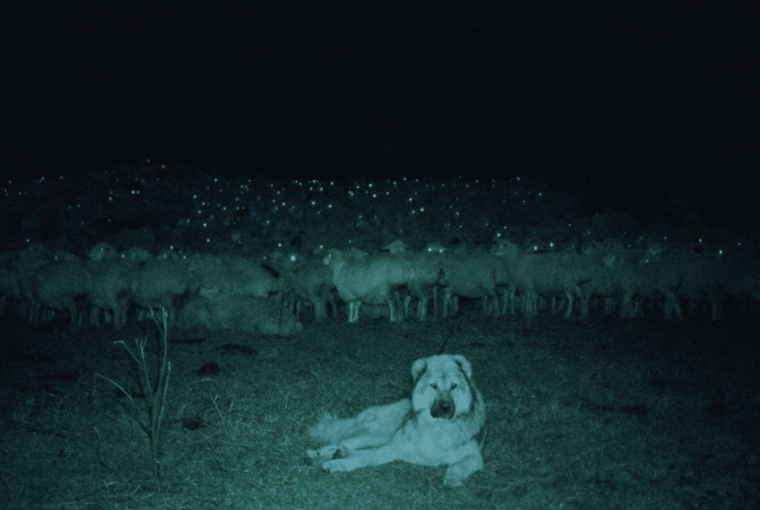
This month, we are publishing Rohan Crickmar’s review of Wind, Talk to Me by Stefan Djordjevic, a personal reflection on grief. In our Interviews section, you will find Jack Page’s conversation with Djordjevic, in which the director shares what it means to deal with personal topics through a film. The conversation is part of Jack’s coverage of the Crossing Europe festival in Linz, which also features a review of Tereza Nvotová’s Father, another film that deals with grief, albeit from a more removed perspective. For our regional focus on the Baltics 2026, Anna Batori reviewed Raitis and Lauris Ābele’s Dog of God, a sexually and visually vibrant animation feature set during the 17th century and concerned with issues of belief. Finally, at the recent goEast film festival in Wiesbaden, Natalia Ashurovskaya saw Ivan Boiko’s The Wind Blows Wherever It Wants about shepherds based in the highlands of Tushetia, Georgia.
We hope you enjoy our reads.
Konstanty Kuzma & Moritz Pfeifer
Editors
Note: Due to delays in our publication schedule, this issue was published in the month of May 2026.

Leave a Comment